Washington Post
By Ellen Johnson-Sirleaf
Thursday, April 9, 2009; Page A17
For more than a decade, much of Africa has been moving forward. Economic growth is rising, poverty is falling and democratic governance is spreading. But the global financial crisis threatens to undo this progress by reducing investment, exports and aid just as they should be expanding to build on these successes.
Read More............
Thursday, April 9, 2009

Tuesday, April 7, 2009
The Forgotten People in Africa
April 07, 2009
By Nat Hentoff
After Sudan's Adolf Hitler, Gen. Omar Hassan al-Bashir, expelled 13 international humanitarian organizations from Darfur, with the rest to follow within the year, four black African Muslim children - mourned by what is left of their families at the Shangil Tobaya refugee camp - died of malnutrition in late March. Their official death notices will not appear in American newspapers.
As a memorial, I give you the names and ages of the dead children, as provided by the rebel Darfur Justice and Equality Movement (Sudan Tribune, March 24): Abdel-Latif Hassan Gar El-Nabi, 7 months old; Ahmed Musa, 7 months old; Munir Mohamed Ibrahim, 9 months old; Esam Babiker Yacoub, 3 years old.
Read More.............
------------------------------
I can't help by being burdened by what has happened in Sudan, specifically Darfur.
I called my Senators offices late last year to discuss my concerns. In talking with a then Senator Salazar's staffer, he explained that he had some talking points that he could recite to me, but that these points would not satisfy me.
I have always been perplexed as to why we could intervene in southeastern Europe to stop the slaughter of European Muslims, but we could not muster the courage to stop the slaughter of Christian blacks in Sudan. Do these people not matter as much? Is it a matter of religion, location, or race? Why has our only response from the highest levels of our government either been talking points or silence when it comes to Sudan.
As per the aforementioned article, the death is not limited to Christians. Death in Darfur has become something that is acceptable to us by now. I suppose the entire continent of Africa is something so remote and distant for most of us that these concerns don't win or lose elections here in the States.
I think if we follow the money we may begin to understand the inaction by our government, and so many others. Death and destruction are consuming the people of Darfur, and the best thing the governments of this world can come up with is an arrest warrant for the leader of the genocide. The value of life in Darfur(some reports indicate as many as 7 million people live in this area) must be less than the value of life in Kosovo(1.8 million population)...................... Gen. Omar Hassan al-Bashir has traveled outside his country several times with no attempted arrest. If this International warrant had any teeth or resolve we would send a team to his country and remove him to stand court in Europe for his crimes. Meanwhile, as we stand by, people continue to die, and the silence is truly deafening for some.............
By Nat Hentoff
After Sudan's Adolf Hitler, Gen. Omar Hassan al-Bashir, expelled 13 international humanitarian organizations from Darfur, with the rest to follow within the year, four black African Muslim children - mourned by what is left of their families at the Shangil Tobaya refugee camp - died of malnutrition in late March. Their official death notices will not appear in American newspapers.
As a memorial, I give you the names and ages of the dead children, as provided by the rebel Darfur Justice and Equality Movement (Sudan Tribune, March 24): Abdel-Latif Hassan Gar El-Nabi, 7 months old; Ahmed Musa, 7 months old; Munir Mohamed Ibrahim, 9 months old; Esam Babiker Yacoub, 3 years old.
Read More.............
------------------------------
I can't help by being burdened by what has happened in Sudan, specifically Darfur.
I called my Senators offices late last year to discuss my concerns. In talking with a then Senator Salazar's staffer, he explained that he had some talking points that he could recite to me, but that these points would not satisfy me.
I have always been perplexed as to why we could intervene in southeastern Europe to stop the slaughter of European Muslims, but we could not muster the courage to stop the slaughter of Christian blacks in Sudan. Do these people not matter as much? Is it a matter of religion, location, or race? Why has our only response from the highest levels of our government either been talking points or silence when it comes to Sudan.
As per the aforementioned article, the death is not limited to Christians. Death in Darfur has become something that is acceptable to us by now. I suppose the entire continent of Africa is something so remote and distant for most of us that these concerns don't win or lose elections here in the States.
I think if we follow the money we may begin to understand the inaction by our government, and so many others. Death and destruction are consuming the people of Darfur, and the best thing the governments of this world can come up with is an arrest warrant for the leader of the genocide. The value of life in Darfur(some reports indicate as many as 7 million people live in this area) must be less than the value of life in Kosovo(1.8 million population)...................... Gen. Omar Hassan al-Bashir has traveled outside his country several times with no attempted arrest. If this International warrant had any teeth or resolve we would send a team to his country and remove him to stand court in Europe for his crimes. Meanwhile, as we stand by, people continue to die, and the silence is truly deafening for some.............
Monday, April 6, 2009
Madonna, Malawi and adoption madness
Her adoption controversy highlights the problems when politics trumps the welfare of the child.
By Beth Nonte Russell April 6, 2009
The controversy surrounding the attempt by Madonna to adopt a second child from an orphanage in Malawi brings to light the confusing situation in international adoption. On Friday, a judge in that nation rejected the singer's adoption request on the grounds that waiving an 18-month residency requirement would set a dangerous precedent. Madonna was granted such an exemption when she adopted a Malawian boy in 2006.
This is just another example of how the intricacies of each country's legal system, cultural mores and poverty level intersect with the guidelines of The Hague treaty on inter country adoptions.
The result has been a decline in the number of orphans from developing countries being adopted by Americans. While adoptions become harder, the number of orphans grows, especially in Africa because of the tragedy of the AIDS crisis. Malawi has an estimated 1 million orphans, and untold numbers of orphans languish in other African countries as well as in Romania, Russia, China and Latin America.
Read More...........
--------------------------
While I don't agree with every aspect of her synopsis, the opinion of Beth Nonte Russell certainly gives us something to think about.
I am personally torn. I have had the benefit of visiting some of these children in their environment. I draw most of my conclusions from our experience in developing House of Faith Orphanage in Silembe, Zambia. This is a special, and beautiful place. Though the opportunities are limited, there is something you miss when you leave this place. What if you were born and raised there? What if your extended family lived in the area? What would it then be like for a young child to be up-rooted and joined to a new family in a far away place?
We are not attempting to develop an institutional environment in Silembe. Based on some of the research the author provides in her opinion, I think we may need to reduce the number of children in each home to provide a more cohesive family environment for the child; however, this transition will dramatically increase our capital costs per child. There are always trade-offs.
In addition, we purposely maintain contacts with extended family for each child in the community when possible. When this child is adopted into families located in foreign countries, this family connection is much more distant, infrequent, and complicated. I personally believe that international adoption is part of the solution for these children, besides all of the arguments against it.
Please consider this example as you consider your opinion.
In Zambia, there are approximately 1.2 million Orphans. If you removed this portion of the population, you are left with 10,800,000 people. Per additional research I was able to pull, the average household size in poor countries is between 5 and 6 people versus 2.6 in the US.
For our purposes, we'll use 5 people per household in Zambia to account for many of the Orphan children that are already living in these households, which would finally give us 2.16 million households. This analysis would indicate that over 1/2 of all households would have to adopt one Orphan to adsorb this vulnerable group into family units. Not only will this not happen, but many of these children will receive less than ideal care due to economic pressures. In addition, the family has to be willing and capable of caring for additional children.
For care of Orphans, there has to be an approach that involves many solutions. Originally we founded Global Orphan Relief with the intent of helping families adopt children, but upon realizing the magnitude of this group of children we realized that we would also have to reach out and provide care and that is where we began this work.
Whatever your opinion, please pray for these children, and support them in some way.
Peace,
Scott A. Nordstrom
Founder, President
Global Orphan Relief
By Beth Nonte Russell April 6, 2009
The controversy surrounding the attempt by Madonna to adopt a second child from an orphanage in Malawi brings to light the confusing situation in international adoption. On Friday, a judge in that nation rejected the singer's adoption request on the grounds that waiving an 18-month residency requirement would set a dangerous precedent. Madonna was granted such an exemption when she adopted a Malawian boy in 2006.
This is just another example of how the intricacies of each country's legal system, cultural mores and poverty level intersect with the guidelines of The Hague treaty on inter country adoptions.
The result has been a decline in the number of orphans from developing countries being adopted by Americans. While adoptions become harder, the number of orphans grows, especially in Africa because of the tragedy of the AIDS crisis. Malawi has an estimated 1 million orphans, and untold numbers of orphans languish in other African countries as well as in Romania, Russia, China and Latin America.
Read More...........
--------------------------
While I don't agree with every aspect of her synopsis, the opinion of Beth Nonte Russell certainly gives us something to think about.
I am personally torn. I have had the benefit of visiting some of these children in their environment. I draw most of my conclusions from our experience in developing House of Faith Orphanage in Silembe, Zambia. This is a special, and beautiful place. Though the opportunities are limited, there is something you miss when you leave this place. What if you were born and raised there? What if your extended family lived in the area? What would it then be like for a young child to be up-rooted and joined to a new family in a far away place?
We are not attempting to develop an institutional environment in Silembe. Based on some of the research the author provides in her opinion, I think we may need to reduce the number of children in each home to provide a more cohesive family environment for the child; however, this transition will dramatically increase our capital costs per child. There are always trade-offs.
In addition, we purposely maintain contacts with extended family for each child in the community when possible. When this child is adopted into families located in foreign countries, this family connection is much more distant, infrequent, and complicated. I personally believe that international adoption is part of the solution for these children, besides all of the arguments against it.
Please consider this example as you consider your opinion.
In Zambia, there are approximately 1.2 million Orphans. If you removed this portion of the population, you are left with 10,800,000 people. Per additional research I was able to pull, the average household size in poor countries is between 5 and 6 people versus 2.6 in the US.
For our purposes, we'll use 5 people per household in Zambia to account for many of the Orphan children that are already living in these households, which would finally give us 2.16 million households. This analysis would indicate that over 1/2 of all households would have to adopt one Orphan to adsorb this vulnerable group into family units. Not only will this not happen, but many of these children will receive less than ideal care due to economic pressures. In addition, the family has to be willing and capable of caring for additional children.
For care of Orphans, there has to be an approach that involves many solutions. Originally we founded Global Orphan Relief with the intent of helping families adopt children, but upon realizing the magnitude of this group of children we realized that we would also have to reach out and provide care and that is where we began this work.
Whatever your opinion, please pray for these children, and support them in some way.
Peace,
Scott A. Nordstrom
Founder, President
Global Orphan Relief
Thursday, April 2, 2009
Buy a Brick Build a House
From one of the Board Members of Global Orphan Relief:
We have finally gotten the ebay auction up and running for the Buy A Brick, Build A House campaign. Please see the link below.
I would like to ask each of you to consider sharing this auction site via email with anyone and everyone you know. The more exposure we get for this auction the better. It is pretty easy to ask people to only donate a dollar. We have already started to receive some donations today, and they have been ranging from $2 to $20. Everything adds up!
I have contacted a bunch of people I know, and I am asking them to share the auction with people they know. So, hopefully, we can have a very successful event!!
Thanks for your help, and if you have any questions, please let me know!auction site: http://cgi.ebay.com/ws/eBayISAPI.dll?ViewItem&item=270367406242
Blessings,Jen
We have finally gotten the ebay auction up and running for the Buy A Brick, Build A House campaign. Please see the link below.
I would like to ask each of you to consider sharing this auction site via email with anyone and everyone you know. The more exposure we get for this auction the better. It is pretty easy to ask people to only donate a dollar. We have already started to receive some donations today, and they have been ranging from $2 to $20. Everything adds up!
I have contacted a bunch of people I know, and I am asking them to share the auction with people they know. So, hopefully, we can have a very successful event!!
Thanks for your help, and if you have any questions, please let me know!auction site: http://cgi.ebay.com/ws/eBayISAPI.dll?ViewItem&item=270367406242
Blessings,Jen
Friday, March 27, 2009
Royal Mandebala - 6 Days Old
God sent us another child on February 21st. He is 6 days old, and here is his details:
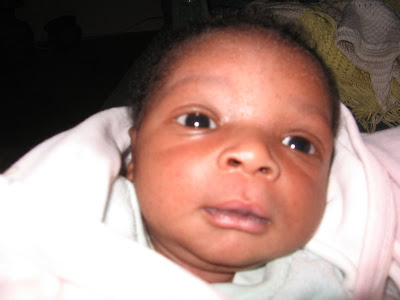
Name: Royal Mandebala
DOB: 16-02-09 Weight: 3.2kgs.
Mother: Deceased
Father: Kenny Mandebala
Brothers:3
Sisters: 3
Village: Mbwtsai, Chief Mukuni
His Mother died during child birth. Kenny brothers knows our Director at HOFO, Jo Anne Byrum, and so Gibson called and ask if we could take and care for the baby. The father has 6 other children and can not afford to buy the formula, he knew Royal would suffer if we was to attempt to care for him with all of his other responsibilities, and now without his wife. He decided to contact the Orphanage and ask if we could take the child. So God has blessed us with a new baby boy -message from :o) JO Anne <><
Good report for Royal on March 21st:
William is now at 8 kgs. We have had him a over 2 months and he has gone from 8.8lbs to 17.6. God is blessing our children.
Royal is the 23rd child, and we will begin to fill up the 3rd home very soon. Many of these children still need sponsors at $50 per month. This support provide so much hope for these very vulnerable children, we thank many of you as you have already done so much.
Peace, GO!
http://www.globalorphanrelief.org/

Name: Royal Mandebala
DOB: 16-02-09 Weight: 3.2kgs.
Mother: Deceased
Father: Kenny Mandebala
Brothers:3
Sisters: 3
Village: Mbwtsai, Chief Mukuni
His Mother died during child birth. Kenny brothers knows our Director at HOFO, Jo Anne Byrum, and so Gibson called and ask if we could take and care for the baby. The father has 6 other children and can not afford to buy the formula, he knew Royal would suffer if we was to attempt to care for him with all of his other responsibilities, and now without his wife. He decided to contact the Orphanage and ask if we could take the child. So God has blessed us with a new baby boy -message from :o) JO Anne <><

Good report for Royal on March 21st:
William is now at 8 kgs. We have had him a over 2 months and he has gone from 8.8lbs to 17.6. God is blessing our children.
Royal is the 23rd child, and we will begin to fill up the 3rd home very soon. Many of these children still need sponsors at $50 per month. This support provide so much hope for these very vulnerable children, we thank many of you as you have already done so much.
Peace, GO!
http://www.globalorphanrelief.org/
Silembe Update | 16 March 2009

GLOBAL ORPHAN RELIEF
House of Faith Orphanage
Silembe, Zambia
We recently received an update from our team in Zambia:
-----------------
We are deciding on the place to start the next buildings, -short-term missionary accommodations.
One place that we are considering is 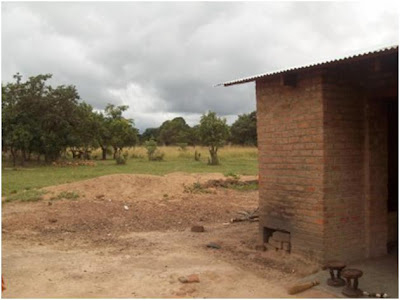 behind the bath house and near the trees.
 behind the bath house and near the trees.
Another option is toward the Store and school from this angle of the Kitchen/laundry.
Bought paint today for the primer. Should be going on the ceilings and walls in a day or two.

I'll be getting the furnishings, etc. to finish the bath house as well as the 4th house.
We could put the accommodations behind the first houses near where bricks were made and the entrance. We can begin as soon as The desired location is confirmed and some guide lines on what the building should look like. I'll need to stop work soon if we can not start the next building.
We have heard that there are some children needing homes and will be filling the 3rd home soon.
Pray for Wednesday, as Social Welfare is suppose to inspect our operations. One never knows how these things will go. Sometimes gold plated everything is not good enough.
God Bless,
Mike
------------------
We have heard that there are some children needing homes and will be filling the 3rd home soon.
Pray for Wednesday, as Social Welfare is suppose to inspect our operations. One never knows how these things will go. Sometimes gold plated everything is not good enough.
God Bless,
Mike
------------------
2009 plans include finishing the 4th home, the 2nd bath house, and will build an activity center for the children. In addition, we plan to start developing housing for short-term missionaries that will serve at HOFO.
Please keep these children in your prayers.
-Blessings, GO!
AIDS Orphans in South Africa Face Uncertain Future
Originally Aired: March 25, 2009
With so many South Africans struck down by AIDS, a generation of children is watching their parents die and being forced to form new family units. In his third report from South Africa, Ray Suarez explores the plight of AIDS orphans.
JIM LEHRER: Next, Ray Suarez has the last of our three global health reports from South Africa this week, the devastating impact of AIDS on children.
RAY SUAREZ: It's early on a Sunday morning. A young girl checks her pot of corn while her sister looks on. The girls do a few quick chores, get dressed for church, wash up, and buff up their shoes.
Nothing unusual about any of that. The scene is repeated throughout the South African province of KwaZulu-Natal and around the world, with one difference: The 12-year old twins, Batkithi and Bonisani Masoko, and their 10-year-old sister, Xolisile, are on their own. Their parents both died of AIDS.
Read More or Watch Video..............
With so many South Africans struck down by AIDS, a generation of children is watching their parents die and being forced to form new family units. In his third report from South Africa, Ray Suarez explores the plight of AIDS orphans.
JIM LEHRER: Next, Ray Suarez has the last of our three global health reports from South Africa this week, the devastating impact of AIDS on children.
RAY SUAREZ: It's early on a Sunday morning. A young girl checks her pot of corn while her sister looks on. The girls do a few quick chores, get dressed for church, wash up, and buff up their shoes.
Nothing unusual about any of that. The scene is repeated throughout the South African province of KwaZulu-Natal and around the world, with one difference: The 12-year old twins, Batkithi and Bonisani Masoko, and their 10-year-old sister, Xolisile, are on their own. Their parents both died of AIDS.
Read More or Watch Video..............
Subscribe to:
Posts (Atom)
